Cleansing seems like the simplest step in a skincare routine: apply cleanser, rinse, and move on. But the cleanser you choose can influence how your skin feels for the rest of your routine.
A cleanser that is too harsh may leave skin feeling tight or uncomfortable. One that is too mild for your needs may not give you the cleansing experience you’re looking for. And if you’re dealing with excess oil or clogged pores, you may want something different from someone whose main concern is dryness.
The goal isn’t to find the cleanser with the longest ingredient list or the strongest claims. It’s to find one that suits your skin type, concerns and routine.
What should a face cleanser actually do?
At its most basic, a cleanser helps remove dirt, excess oil, sweat, makeup and other material that accumulates on the skin.
For everyday cleansing, the American Academy of Dermatology recommends a gentle, non-abrasive approach, using lukewarm water and avoiding aggressive scrubbing.
Your skin shouldn’t necessarily feel “squeaky clean” after washing. A very tight or uncomfortable feeling after cleansing can be a sign that your cleansing routine isn’t well suited to your skin.
That makes how your skin feels after cleansing an important clue when choosing a product.
Start with your skin type
Instead of beginning with trending ingredients or product claims, first think about how your skin normally behaves.
Dry skin
Dry skin may feel tight, rough or uncomfortable, particularly after washing.
Look for cleansers designed around gentle cleansing and moisture retention rather than aggressive oil removal.
Creamy or hydrating cleansers can be useful starting points. Ingredients such as glycerin, ceramides and hyaluronic acid may also appear in formulas positioned for dry skin.
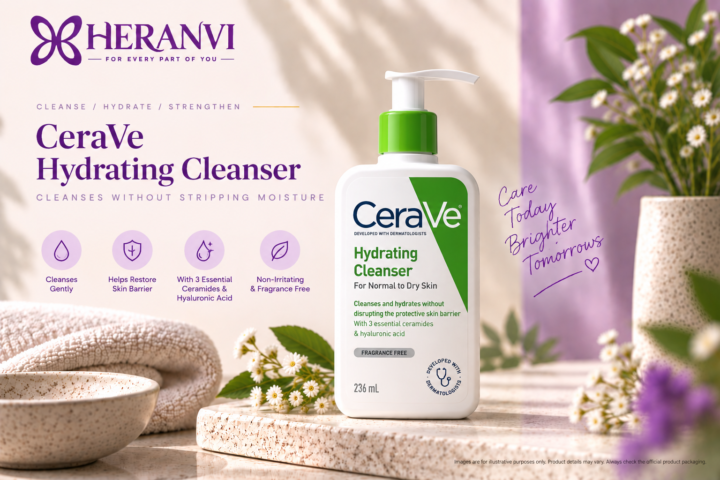
Among the products currently evaluated by Heranvi, CeraVe Hydrating Cleanser is positioned for normal-to-dry skin and combines cleansing with ingredients including ceramides and hyaluronic acid.
The important point isn’t that everyone with dry skin needs that particular product. Rather, it demonstrates the type of formulation worth considering when dryness is your main concern.
Sensitive skin
Sensitive skin deserves a relatively simple approach.
A cleanser doesn’t need to provide several treatment functions at once. For many people, its primary job can simply be to cleanse comfortably without making the routine unnecessarily complicated.
Consider products positioned as gentle and suitable for sensitive skin, and pay attention to how your skin responds after washing.
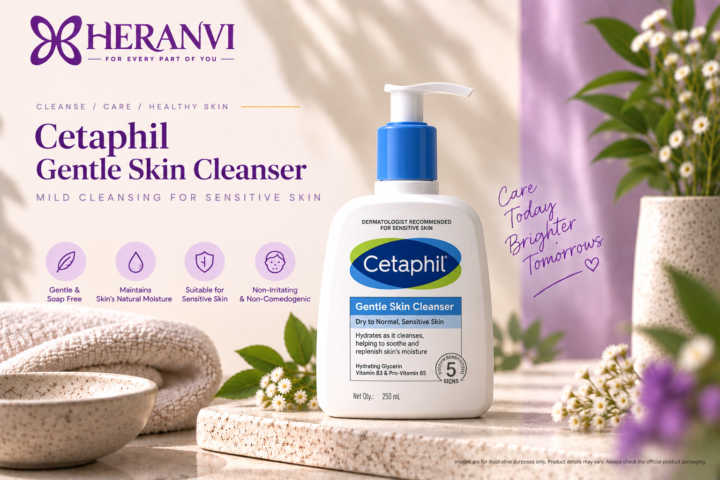
Cetaphil Gentle Skin Cleanser, for example, is positioned for dry-to-normal sensitive skin and is designed as a mild everyday cleanser.
If your skin regularly becomes uncomfortable after cleansing, reconsidering the cleanser itself may be more useful than simply adding more products afterward.
Oily skin
Having oily skin doesn’t automatically mean you need the strongest cleanser available.
Over-cleansing or aggressive scrubbing isn’t the goal. Instead, look for a cleanser that removes excess oil while still fitting comfortably into your routine.
Some people with oily skin may prefer a foaming cleanser, while others may choose a cleanser containing an active ingredient when oiliness occurs alongside clogged pores or breakouts.
The right choice depends on the concern you’re trying to address—not simply the presence of oil.
Acne-prone or congested skin
If excess oil, clogged pores and breakouts are important concerns, an active cleanser may be worth considering.
One common ingredient is salicylic acid, a beta-hydroxy acid frequently used in acne-focused skincare.
The American Academy of Dermatology includes salicylic-acid products among over-the-counter options that can be useful for certain types of acne.
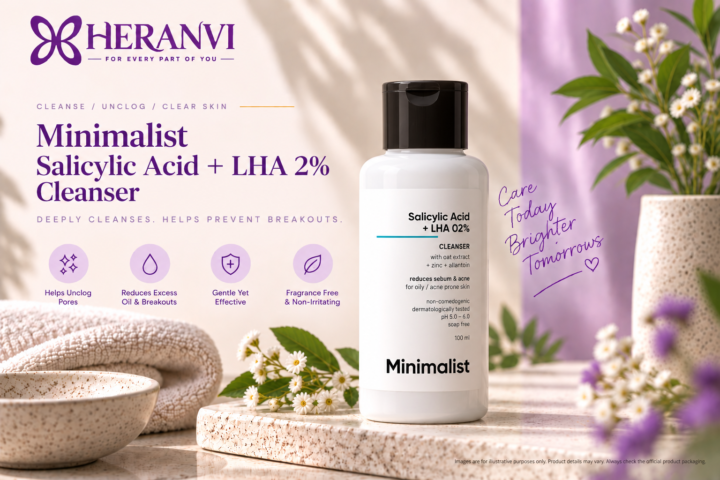
For example, Minimalist Salicylic Acid + LHA 2% Cleanser is positioned for oily, combination and acne-prone skin and combines salicylic acid with LHA.
That doesn’t mean everyone experiencing acne needs an active cleanser. Persistent, painful or severe acne may require assessment and treatment beyond changing a face wash.
Gentle cleanser or active cleanser?
This is one of the most useful distinctions to make.
A gentle cleanser primarily focuses on cleansing while minimizing unnecessary irritation or dryness.
An active cleanser also contains an ingredient intended to address a particular concern, such as salicylic acid for acne-prone or congested skin.
Neither category is automatically better.
If your main priorities are everyday cleansing, dryness or sensitivity, a gentle cleanser may make more sense.
If excess oil, clogged pores or breakouts are significant concerns, an appropriately formulated active cleanser may be worth considering.
Your cleanser should solve a problem you actually have—not simply contain an ingredient that’s currently popular.
Pay attention to ingredients—but don’t choose by one ingredient alone
Ingredient lists are useful, but skincare products work as complete formulations.
Seeing hyaluronic acid on a label doesn’t automatically make a cleanser ideal for dry skin, just as seeing salicylic acid doesn’t automatically make a product ideal for every person with acne.
Look at the combination of:
- intended skin type
- formulation
- active ingredients
- your primary concern
- how frequently you plan to use it
- how your skin responds
This provides a more useful basis for choosing than focusing on a single highlighted ingredient.
Don’t confuse cleansing with treatment
A cleanser stays on the skin for a relatively short period before being rinsed away.
That doesn’t make ingredients in cleansers irrelevant, but it does mean you shouldn’t expect your face wash to handle every skincare concern by itself.
For example, choosing an acne-focused cleanser does not replace professional care when acne is persistent or severe.
Similarly, someone experiencing significant dryness may need to think about the rest of their routine—including moisturization—rather than searching endlessly for a “perfect” cleanser.
Think of cleansing as the foundation of the routine, not the entire routine.
Common cleanser mistakes
Using very hot water
Lukewarm water is generally a better choice for routine face washing.
Scrubbing aggressively
More friction doesn’t necessarily mean cleaner skin. Gentle application is usually sufficient.
Choosing the strongest cleanser because your skin is oily
Oiliness alone doesn’t mean your skin needs aggressive cleansing.
Changing products too frequently
Constantly switching products makes it harder to understand how your skin is responding.
Following trends instead of your skin
An ingredient becoming popular online doesn’t mean your routine suddenly needs it.
A simple way to choose
If you’re overwhelmed by cleanser options, start with two questions:
What is my skin type?
Then:
What is the main problem I want my cleanser to help with?
For example:
| Your situation | A useful starting point |
|---|---|
| Dry or tight-feeling skin | Gentle, hydrating cleanser |
| Sensitive skin | Mild, simple everyday cleanser |
| Oily skin | Effective but non-aggressive cleansing |
| Oily + clogged pores/breakouts | Consider an appropriate active cleanser |
| Normal skin without major concerns | Simple gentle cleanser |
You don’t need the cleanser with the most features. You need one whose purpose aligns with your skin.
Three different cleanser approaches
The cleansers currently evaluated by Heranvi illustrate three useful approaches.
Cetaphil Gentle Skin Cleanser represents the gentle-cleansing route, particularly for dry, normal and sensitive skin.
CeraVe Hydrating Cleanser represents a hydration-focused approach for normal-to-dry skin.
Minimalist Salicylic Acid + LHA 2% Cleanser represents an active-cleansing approach for oily and acne-prone skin.
These aren’t universal rankings. Each addresses a somewhat different need, which is why Heranvi’s recommendation system considers your concerns and skin type rather than treating one cleanser as the “best” option for everyone.
When should you reconsider your cleanser?
Pay attention to what happens consistently after washing.
If cleansing repeatedly leaves your skin feeling excessively tight, dry or uncomfortable, reconsider whether the product and cleansing routine suit your skin.
Likewise, if you’re using a basic cleanser while specifically trying to manage concerns such as recurring clogged pores, you may want to consider whether a more targeted formulation is appropriate.
And when skin problems are persistent, painful, worsening or difficult to manage, getting advice from a qualified dermatologist is more appropriate than repeatedly changing products.
The bottom line
Choosing a cleanser doesn’t have to be complicated.
Start with your skin type, identify your main concern, and then decide whether you need straightforward gentle cleansing or something more targeted.
For dry or sensitive skin, prioritize comfort and gentle cleansing. For oily skin, focus on effective cleansing without assuming stronger is always better. And if acne or clogged pores are a major concern, an appropriately formulated active cleanser may have a role.
The best cleanser isn’t the one making the biggest promise.
It’s the one that makes sense for your skin and your routine.