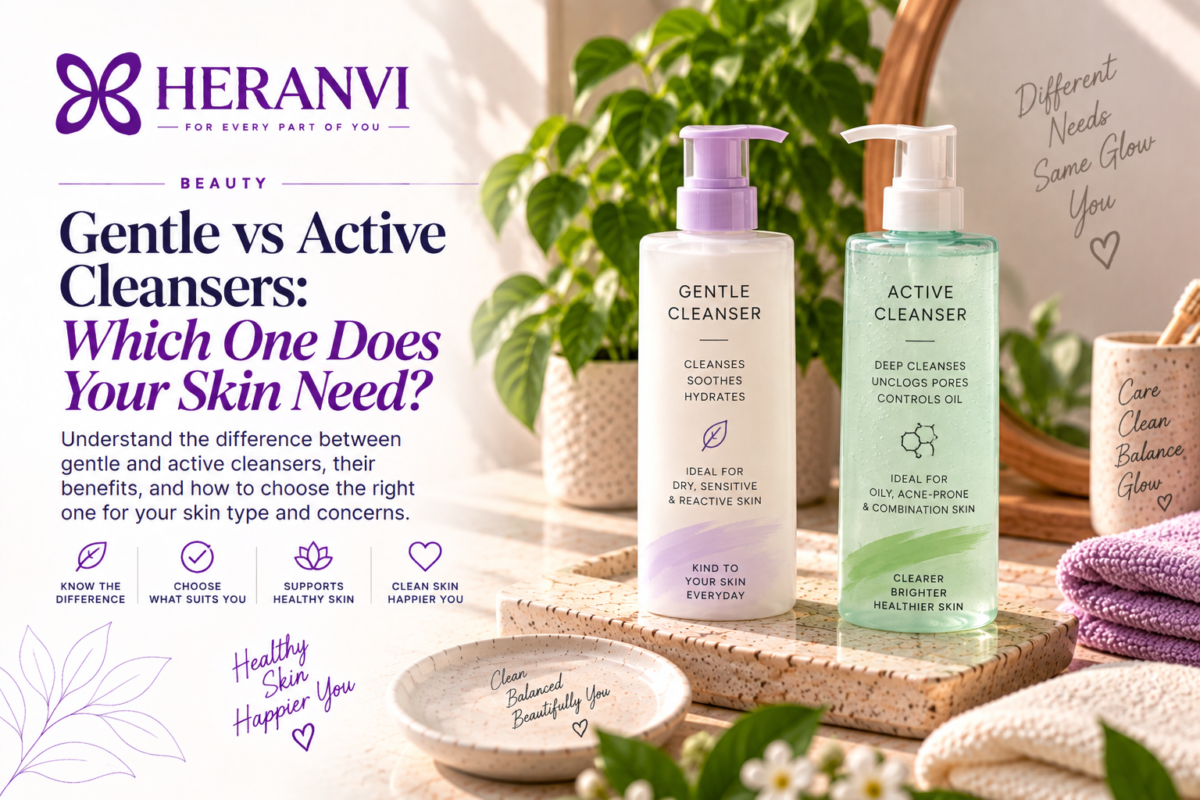
Not every cleanser needs to do the same job.
Some cleansers are designed primarily to remove dirt, sweat, excess oil and other buildup while keeping the cleansing step relatively simple. Others include active ingredients intended to address concerns such as clogged pores, excess oil or breakouts.
That gives us a useful distinction: gentle cleansers and active cleansers.
Neither is automatically better. The more useful question is: what does your skin actually need from the cleansing step?
What is a gentle cleanser?
A gentle cleanser focuses primarily on cleansing the skin without making the routine unnecessarily aggressive.
The American Academy of Dermatology recommends gentle, non-abrasive cleansing, lukewarm water and avoiding scrubbing when washing the face.
A gentle cleanser can therefore be a sensible starting point when your main goal is everyday cleansing rather than targeting a particular skin concern through your face wash.
This approach may be particularly relevant if your skin tends to feel dry, tight or uncomfortable after cleansing.
What is an active cleanser?
An active cleanser combines cleansing with an ingredient intended to address a particular concern.
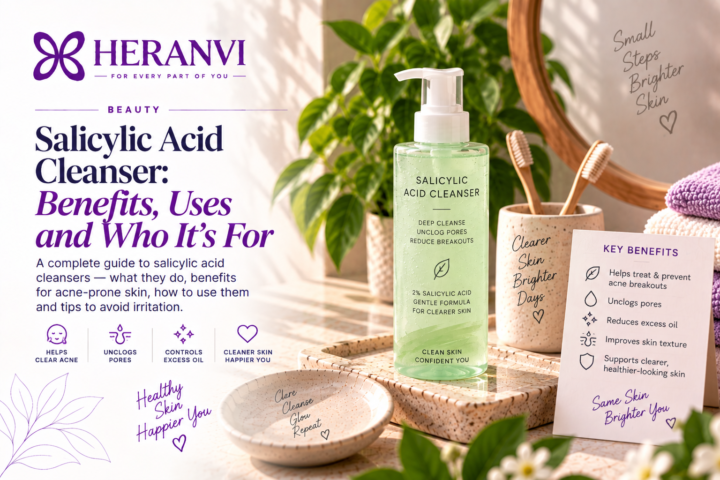
One common example is a cleanser containing salicylic acid, an ingredient frequently used in acne-focused skincare.
The American Academy of Dermatology discusses salicylic acid among over-the-counter ingredients that can be useful for certain types of acne.
That doesn’t mean an active cleanser is simply a “better” version of a gentle cleanser. It has a different purpose.
If you don’t have the concern an active ingredient is intended to address, adding that ingredient to your cleanser may provide little practical benefit to your routine.
Gentle vs active cleanser: the key difference
The simplest way to think about the difference is the job you’re asking the cleanser to perform.
| Gentle cleanser | Active cleanser |
|---|---|
| Primarily focused on everyday cleansing | Combines cleansing with a targeted active ingredient |
| Useful when simplicity and comfort are priorities | Useful when you’re also addressing a specific concern |
| Often suitable as a straightforward daily cleanser | May require more attention to how your skin responds |
| Common choice for dry or sensitive skin | May suit concerns such as excess oil, congestion or breakouts depending on the active |
The categories can overlap. A cleanser containing an active ingredient can still be formulated to cleanse gently, and a product marketed as gentle can contain ingredients that support hydration or the skin barrier.
The distinction is therefore about purpose, not simply whether one product is “mild” and another is “strong.”
When might a gentle cleanser make more sense?
A gentle cleanser may be the more straightforward option when your main priority is simply cleansing your skin comfortably.
If your skin is dry
If your skin frequently feels tight or uncomfortable after washing, aggressive cleansing is unlikely to be the goal.
A cleanser positioned around gentle or hydrating cleansing may make more sense than choosing an acne-focused active cleanser without an acne-related reason.
If your skin is sensitive
A simple routine can make it easier to understand what your skin tolerates.
If your skin is easily irritated, choosing a cleanser primarily for comfortable everyday cleansing can avoid adding an unnecessary active step.
If you don’t have a specific concern to target
You don’t need an active ingredient simply because it is popular.
If your cleanser already removes everyday buildup comfortably and your skin doesn’t have a concern that requires something more targeted, a simple cleanser may be enough.
Two examples of gentle-cleansing approaches
The cleansers Heranvi has evaluated illustrate how even products within the gentle-cleansing category can have somewhat different positioning.
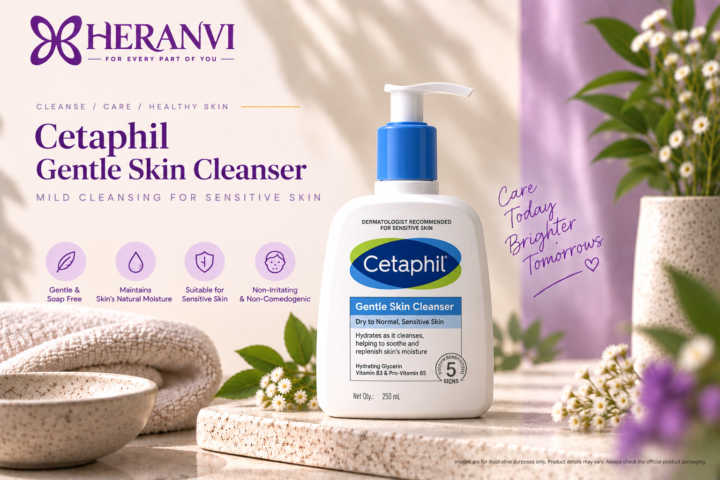
Cetaphil Gentle Skin Cleanser
Cetaphil Gentle Skin Cleanser is positioned for dry-to-normal sensitive skin and focuses on mild everyday cleansing.
Heranvi considers it a useful example of a straightforward gentle cleanser when sensitivity and avoiding an overly stripped feeling are priorities.
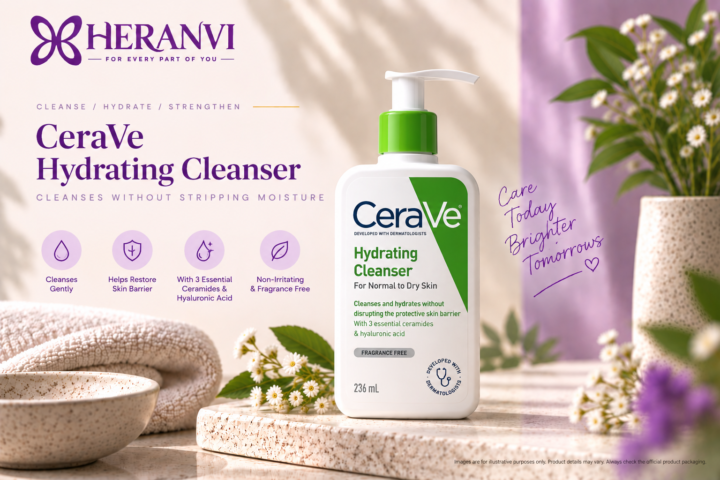
CeraVe Hydrating Cleanser
CeraVe Hydrating Cleanser is positioned for normal-to-dry skin and contains ingredients including ceramides and hyaluronic acid.
It represents a more hydration-focused gentle-cleansing approach for people whose main concern is dryness rather than excess oil or breakouts.
Neither product is universally better. Their usefulness depends on what you’re trying to achieve.
When might an active cleanser make sense?
An active cleanser becomes more relevant when you can identify a specific concern that the active ingredient is intended to address.
If clogged pores are a recurring concern
If congestion is one of the main reasons you’re reconsidering your cleanser, an appropriately formulated active cleanser may be worth considering.
If you have oily, breakout-prone skin
People dealing with excess oil alongside recurring breakouts may prefer a cleanser formulated specifically around those concerns.
That doesn’t mean oily skin always requires an active cleanser. Someone can have oily skin without needing an acne-focused product.
If salicylic acid fits your concern
Salicylic acid is commonly used in products aimed at acne-prone or congested skin.
A salicylic-acid cleanser can provide one way to introduce the ingredient into a routine while keeping it within the cleansing step.
Whether that approach suits you depends on your skin, the rest of your routine and how your skin responds.
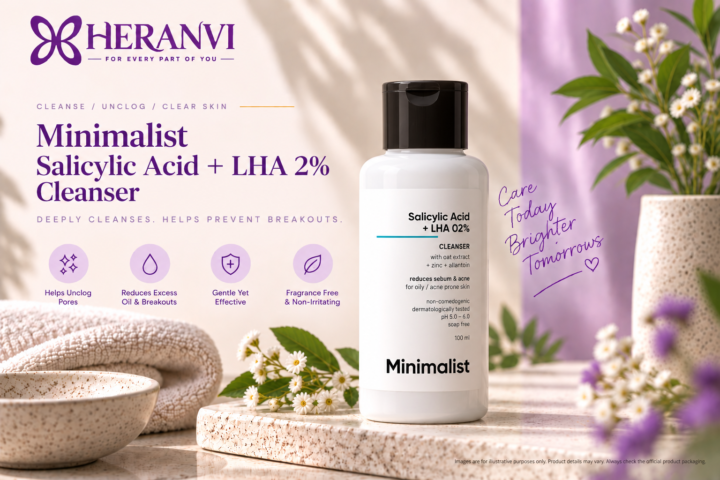
An example of an active cleanser
Minimalist Salicylic Acid + LHA 2% Cleanser is positioned for oily, combination and acne-prone skin.
According to the manufacturer’s current product information, the cleanser combines salicylic acid and LHA at a 2% concentration and is intended to address concerns including excess oil and clogged pores.
Heranvi therefore considers it a different type of option from Cetaphil Gentle Skin Cleanser or CeraVe Hydrating Cleanser.
The comparison isn’t simply:
basic cleanser vs better cleanser.
It’s:
everyday gentle cleansing vs cleansing with a targeted purpose.
Does oily skin automatically need an active cleanser?
No.
Skin type and skin concern aren’t exactly the same thing.
You may have oily skin without significant congestion or breakouts. In that situation, you may simply want a cleanser that removes excess oil comfortably.
On the other hand, if oiliness occurs alongside clogged pores and recurring breakouts, an active cleanser may become more relevant.
This is why choosing products based only on labels such as “for oily skin” can be limiting. Your specific concern matters too.
Does dry skin always need a hydrating cleanser?
Not necessarily, but dryness should influence how you evaluate a cleanser.
If your skin already tends to feel dry or tight, a cleanser that repeatedly makes that sensation worse is probably not helping your routine.
Products positioned around gentle cleansing or hydration can therefore be useful starting points.
But cleanser choice is only one part of managing dryness. Moisturization and the rest of your skincare routine also matter.
Can an active cleanser be too much?
Any skincare product can be a poor fit if it doesn’t suit your skin or routine.
The presence of an active ingredient doesn’t mean you need to use the product as aggressively or as frequently as possible.
Pay attention to how your skin responds, particularly if your routine already contains other active products.
If your skin becomes persistently uncomfortable, irritated or unusually dry, reconsider the routine rather than assuming that discomfort means the product is “working.”
Don’t build your routine around ingredient trends
Skincare trends can make active ingredients feel essential.
Salicylic acid, niacinamide, hyaluronic acid, ceramides and many other ingredients can all have legitimate roles in skincare formulations.
But seeing an ingredient repeatedly on social media doesn’t create a new skin concern that you need to treat.
Start with the problem first.
Then decide whether an ingredient or product category actually addresses it.
A simple decision guide
If you’re deciding between a gentle and active cleanser, use this as a starting point:
| If this sounds like you | Consider starting with |
|---|---|
| Dry skin that feels tight after cleansing | Gentle or hydrating cleanser |
| Sensitive skin without a specific active-treatment need | Simple gentle cleanser |
| Normal skin without major concerns | Gentle everyday cleanser |
| Oily skin without recurring breakouts | Comfortable everyday cleanser suited to oily skin |
| Oily skin with clogged pores or recurring breakouts | Consider an appropriate active cleanser |
This isn’t a medical diagnostic tool. It’s simply a way to make the cleanser decision more purposeful.
What if you’re still unsure?
Start simple.
A cleanser doesn’t need to solve every skincare concern at once.
If you don’t have a clear reason to choose an active cleanser, a gentle cleanser provides a straightforward baseline from which you can understand how your skin responds.
If you do have a specific concern such as recurring clogged pores or breakouts, you can then evaluate whether an appropriate active cleanser fits your routine.
Persistent, painful or worsening acne deserves more than repeated product experimentation. A qualified dermatologist can help determine an appropriate treatment approach.
The bottom line
The choice between a gentle and active cleanser isn’t about finding which category is universally better.
It’s about matching the cleanser’s purpose to your skin and your concerns.
If you mainly need comfortable everyday cleansing—particularly with dry or sensitive skin—a gentle cleanser may be enough.
If excess oil, clogged pores or breakouts are meaningful concerns, an active cleanser containing an ingredient such as salicylic acid may be worth considering.
Choose based on the problem you’re trying to solve, not on which ingredient or product type happens to be trending.