Salicylic acid has become one of the most recognizable ingredients in skincare for oily and acne-prone skin.
You’ll find it in serums, spot treatments, toners and cleansers. But putting salicylic acid into a face wash raises an important question:
Who actually needs a salicylic acid cleanser, and how should it fit into a routine?
The answer depends less on whether salicylic acid is popular and more on your skin type, concerns, the rest of your routine and how your skin responds.
What is salicylic acid?
Salicylic acid is a beta-hydroxy acid (BHA) commonly used in skincare products formulated for acne, clogged pores and oily skin.
The American Academy of Dermatology discusses salicylic acid among over-the-counter ingredients that may help with certain types of acne.
But an ingredient having a useful role doesn’t mean everyone needs it—or that using more of it will produce better results.
What is a salicylic acid cleanser?
A salicylic acid cleanser combines two jobs:
- cleansing the skin
- introducing salicylic acid during the cleansing step
Unlike a leave-on serum or treatment, a cleanser is rinsed from the skin after a relatively short period.
That makes a salicylic acid cleanser one possible way to incorporate the ingredient into a routine without necessarily adding another leave-on product.
It should still be chosen because it addresses a concern you actually have—not simply because it contains an active ingredient.
Who might consider a salicylic acid cleanser?
A salicylic acid cleanser may be worth considering when your skin concerns align with what the ingredient is commonly used for.
Oily skin with clogged pores
If excess oil occurs alongside recurring congestion or clogged pores, a cleanser containing salicylic acid may be a more targeted option than a basic cleanser.
Having oily skin alone, however, doesn’t automatically mean you need an active cleanser.
Acne-prone skin
Salicylic acid is commonly found in products designed for acne-prone skin.
If blackheads, whiteheads or recurring minor breakouts are among your concerns, you may encounter salicylic acid as one of the over-the-counter ingredients used in acne-focused skincare.
Persistent, painful, severe or worsening acne deserves professional assessment rather than repeated experimentation with cleansers.
Combination skin with congestion
Some people experience excess oil or congestion primarily in certain areas of the face.
A salicylic acid cleanser may be relevant when clogged pores are a meaningful concern, but how frequently you use it should still depend on how your skin responds.
Who may not need a salicylic acid cleanser?
Not everyone benefits from turning the cleansing step into an active-treatment step.
Dry skin without acne or congestion
If your main concern is dryness and you don’t regularly experience clogged pores or breakouts, a gentle or hydrating cleanser may make more sense.
Adding salicylic acid simply because it is popular doesn’t address the problem you’re trying to solve.
Sensitive skin that already struggles with active products
If your skin is easily irritated or your routine already contains several active ingredients, introducing another active product deserves some thought.
A simple cleanser may provide a more straightforward baseline.
Skin without a specific concern
If your current cleanser works comfortably and you aren’t dealing with significant oiliness, congestion or breakouts, you don’t necessarily need to replace it with an active cleanser.
Skincare doesn’t become more effective simply by adding more active ingredients.
How often should you use a salicylic acid cleanser?
There isn’t one universal frequency that is right for everyone.
The appropriate frequency depends on factors such as:
- the cleanser’s formulation
- your skin type
- how your skin responds
- other active products in your routine
- whether dryness or irritation develops
The manufacturer’s directions for the specific product provide a practical starting point, but your skin’s response still matters.
If you’re introducing an active cleanser into a routine, you don’t need to assume that using it as frequently as possible is automatically better.
Pay attention to the rest of your routine
A salicylic acid cleanser doesn’t exist in isolation.
If your routine already includes exfoliating acids, retinoids or other acne-focused products, adding another active step may change how your skin tolerates the overall routine.
This is one reason copying someone else’s skincare routine product-for-product isn’t particularly useful.
The same cleanser can occupy a very different role depending on what else someone is using.
What signs suggest you should reconsider frequency?
Pay attention to persistent changes after introducing the cleanser.
If your skin repeatedly becomes unusually dry, tight, uncomfortable or irritated, reconsider how the product fits into your routine.
That may mean reducing frequency, simplifying other active steps or choosing a gentler cleanser.
Discomfort shouldn’t automatically be interpreted as proof that an active ingredient is “working.”
Can you use a gentle cleanser and a salicylic acid cleanser?
They don’t necessarily have to be mutually exclusive.
Some people may prefer a simple gentle cleanser as their regular cleansing option and use an active cleanser when appropriate for their routine.
Others may find that one cleanser already meets their needs.
The important point is that you don’t need to create a complicated rotation simply because multiple products are available.
Choose the simplest routine that addresses your actual concerns comfortably.
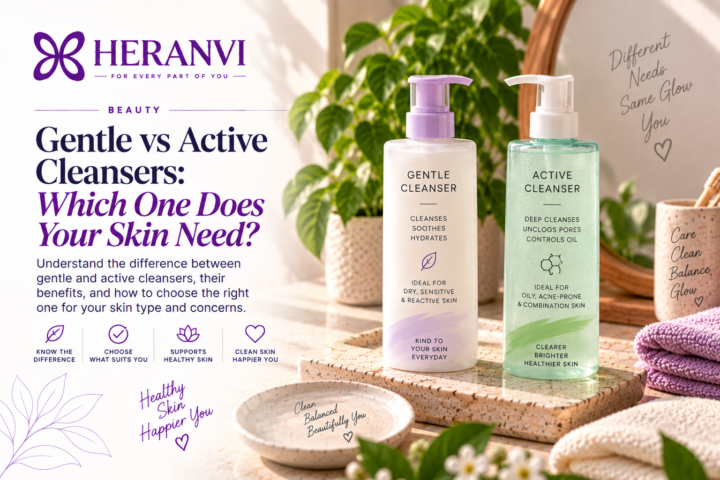
Salicylic acid cleanser vs gentle cleanser
| Consider a gentle cleanser when | Consider a salicylic acid cleanser when |
|---|---|
| Your main goal is straightforward everyday cleansing | Clogged pores or recurring breakouts are meaningful concerns |
| Your skin tends to be dry or sensitive | Your skin is oily or combination and congestion is also present |
| You don’t have a specific active-treatment need | You have a clear reason for introducing salicylic acid |
| You want to keep your cleansing step simple | You want a targeted active within the cleansing step |
Neither column represents the universally “better” choice. They address different needs.
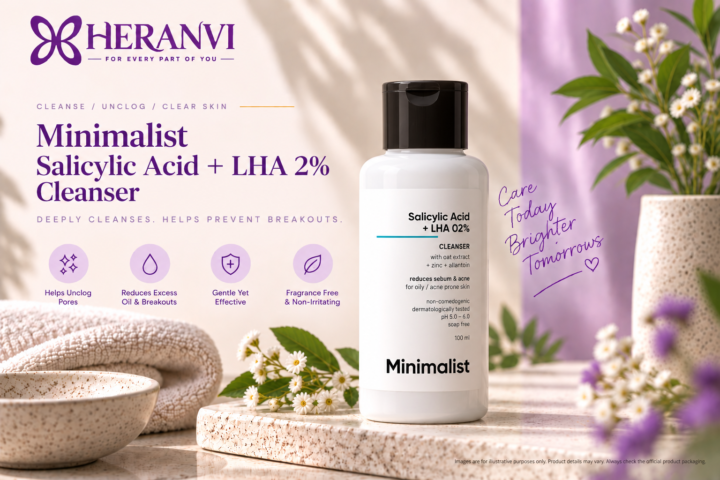
What about Minimalist Salicylic Acid + LHA 2% Cleanser?
One product currently evaluated by Heranvi is Minimalist Salicylic Acid + LHA 2% Cleanser.
According to Minimalist’s current product information, it is designed for oily, combination and acne-prone skin and combines salicylic acid with LHA at a 2% concentration.
Heranvi therefore categorizes it as an active-cleansing option rather than a general-purpose recommendation for every skin type.
It may be relevant when excess oil, clogged pores or breakouts are part of the reason you’re choosing a cleanser.
Heranvi has not personally tested this product, and its inclusion here should not be interpreted as medical advice or a universal recommendation.
What if your main concern is dryness?
If dryness, tightness or sensitivity is your main concern, you may not need an acne-focused active cleanser at all.
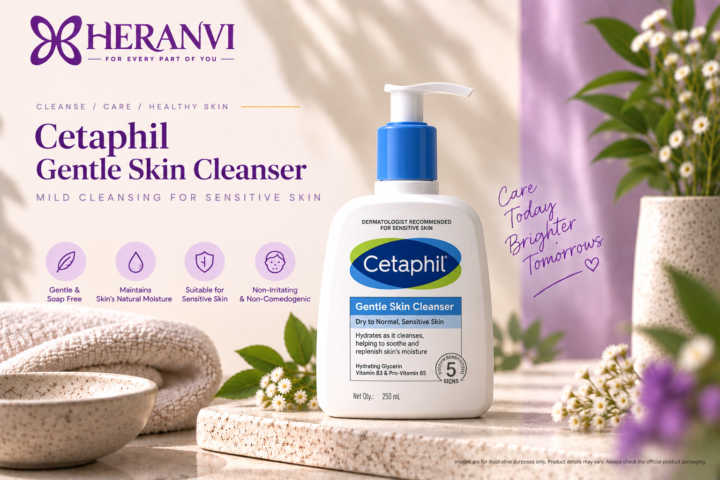
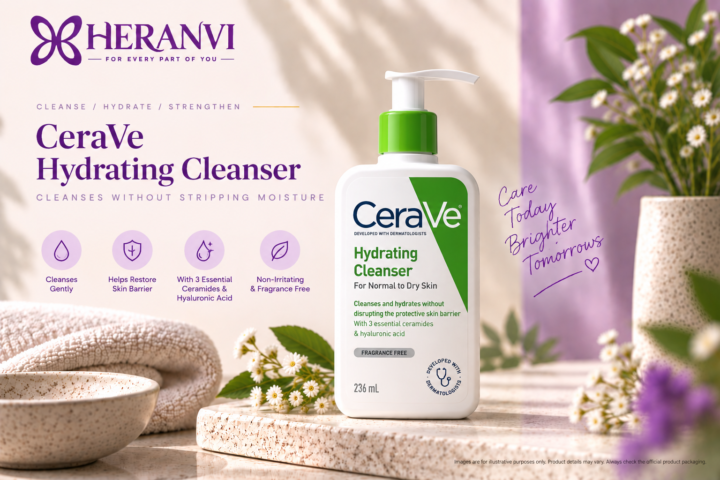
Products such as Cetaphil Gentle Skin Cleanser and CeraVe Hydrating Cleanser illustrate different gentle-cleansing approaches for people whose priorities are different from oily or congestion-prone skin.
This is why Heranvi doesn’t treat one cleanser as the best choice for everyone.
The useful comparison is not which cleanser has the most impressive ingredient list. It’s which formulation better matches the problem you’re trying to solve.
Don’t expect your cleanser to manage severe acne alone
A cleanser is only one part of a skincare routine.
Changing your face wash repeatedly is unlikely to be an adequate strategy for acne that is persistent, painful, severe, worsening or leaving significant marks or scars.
In those situations, a qualified dermatologist can assess the type and severity of acne and recommend an appropriate treatment approach.
A simple decision checklist
Before choosing a salicylic acid cleanser, ask yourself:
- Do I regularly experience clogged pores or breakouts?
- Is excess oil actually one of my concerns?
- Do I already use other active skincare products?
- Does my skin tend to become dry or irritated easily?
- Am I choosing this ingredient for a specific reason, or simply because it is popular?
If you can’t identify the problem you’re trying to address, you may not need an active cleanser.
The bottom line
A salicylic acid cleanser can make sense when oiliness, clogged pores or acne-related concerns are genuinely part of your skincare needs.
But it isn’t automatically a better cleanser, and it isn’t something every skin type needs.
If your priority is dry or sensitive skin, a straightforward gentle cleanser may make more sense. If congestion and recurring breakouts are meaningful concerns, a salicylic acid cleanser may be worth considering as part of your routine.
As for frequency, there is no universal schedule that works for everyone. Follow the directions for the specific product, consider the other active products you’re using, and pay attention to how your skin responds.
Choose the ingredient because it fits your concern—not because skincare trends tell you that you should be using it.