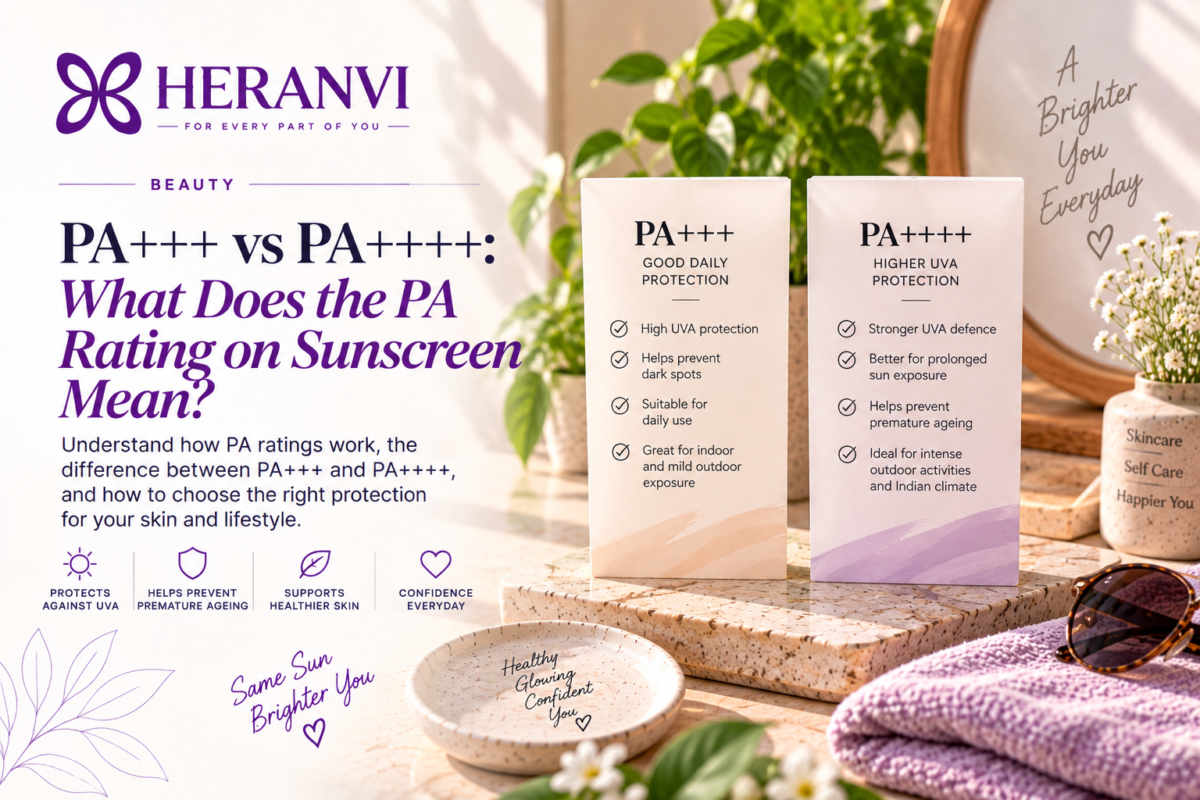
SPF gets most of the attention when people shop for sunscreen, but it does not tell you everything about a product’s ultraviolet protection. On many sunscreens sold in India, you will also see a PA rating such as PA+++, PA++++.
Those plus signs are not simply another way of expressing SPF. The PA system is used to communicate protection against UVA radiation, while SPF primarily measures protection against UVB-related sunburn.
Understanding both can help you read a sunscreen label more meaningfully.
What does PA mean on sunscreen?
PA stands for Protection Grade of UVA. It is a rating system used to indicate the level of UVA protection provided by a sunscreen.
The system is based on a measure called Persistent Pigment Darkening, or PPD, which evaluates how well a sunscreen protects skin against UVA-induced pigmentation under standardized testing conditions.
The result is translated into a simpler consumer-facing PA grade represented by plus signs.
In general, more plus signs indicate a higher tested level of UVA protection.
What is UVA radiation?
Ultraviolet radiation from the sun includes both UVA and UVB wavelengths that affect the skin in different ways.
UVB is strongly associated with sunburn and plays an important role in skin cancer. UVA penetrates more deeply into the skin and contributes to photoageing, pigmentation and other forms of long-term skin damage. Both types of ultraviolet radiation matter when thinking about sun protection.
This is why choosing sunscreen based only on its SPF number does not provide the complete picture.
What does PA+++ mean?
Under the commonly used PA classification system, PA+++ represents a UVA protection factor of at least 8 but less than 16.
That represents a relatively high level of tested UVA protection within the PA grading system.
However, the rating should still be considered alongside the sunscreen’s SPF, formulation, application instructions and how the product fits your actual sun exposure.
What does PA++++ mean?
PA++++ is the highest category in the current four-grade PA system.
It represents a UVA protection factor of 16 or greater under the testing method used for the rating.
Compared with PA+++, PA++++ therefore indicates a higher measured level of UVA protection.
That does not mean every PA++++ sunscreen is automatically a better product for every person. Protection is important, but formulation, skin compatibility, texture and consistent application also influence how useful a sunscreen is in everyday life.
PA+++ vs PA++++: which should you choose?
If two sunscreens are otherwise suitable for you, PA++++ provides a higher stated level of UVA protection than PA+++.
But sunscreen selection should not become a competition to find the largest number of plus signs while ignoring everything else.
A PA+++ sunscreen that suits your skin and that you apply properly and consistently may be more useful in practice than a PA++++ formula that you dislike wearing.
Your amount of sun exposure can also matter. Someone spending extended periods outdoors may place greater emphasis on higher UVA protection than someone with relatively limited exposure, although sun protection remains relevant in both situations.
Is PA the same as SPF?
No. They communicate different information.
SPF primarily measures protection against UVB-related sunburn.
PA communicates a sunscreen’s tested level of UVA protection using the PA grading system.
This means an SPF 50 sunscreen is not automatically PA++++ simply because its SPF number is high. UVA protection needs to be evaluated separately.
When the information is available, looking at both SPF and UVA protection gives you a more complete understanding of what the sunscreen is designed to provide.
What does broad-spectrum mean?
You may also see the term broad-spectrum on sunscreen packaging.
Broad-spectrum sunscreen is designed to provide protection across both UVA and UVB radiation rather than focusing on UVB protection alone.
Different markets use different regulatory systems and labeling conventions for communicating UVA protection. PA ratings are one system you may encounter, while broad-spectrum labeling is another important indicator.
Rather than relying on one label in isolation, consider the available SPF and UVA-protection information together.
Why UVA protection matters for Indian skin
UVA exposure can contribute to pigmentation and photoageing as well as other forms of skin damage. Pigmentation concerns can be particularly relevant for many people with medium and deeper skin tones.
That does not mean there is one PA rating that every Indian consumer must choose. Skin type, pigmentation concerns, lifestyle, duration of outdoor exposure and product preference can all influence the decision.
India also has substantial variation in climate and sun exposure. Your practical sunscreen needs may differ depending on where you live, how much time you spend outdoors and what activities you are doing.
How do PA ratings appear on real sunscreens?
Products currently included in Heranvi’s sunscreen research illustrate how the ratings can differ.
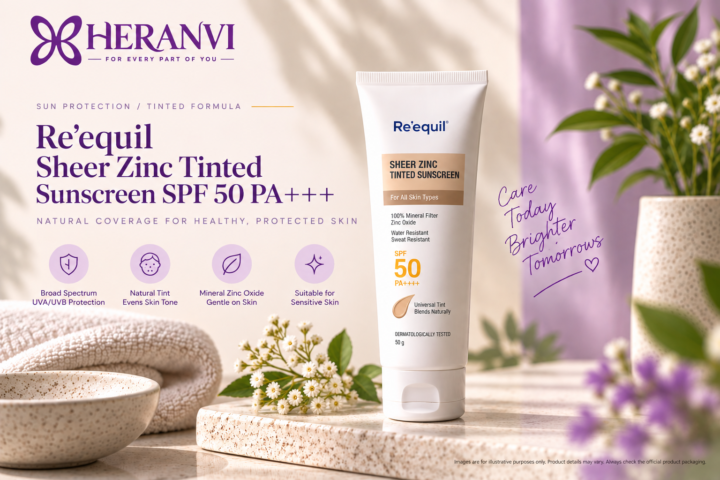
Re’equil Sheer Zinc Tinted Sunscreen SPF 50 PA+++ carries a PA+++ rating according to the manufacturer’s published product information.
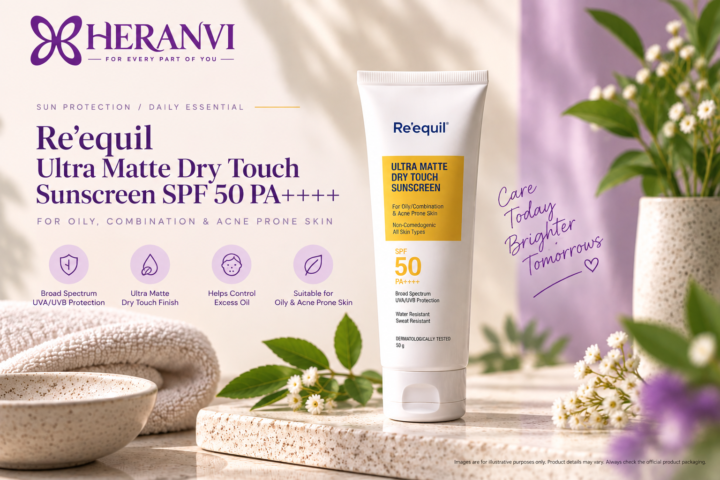
Re’equil Ultra Matte Dry Touch Sunscreen SPF 50 PA++++ carries a PA++++ rating according to the manufacturer.
Both products state SPF 50 protection, while their published PA ratings differ. This is a useful example of why SPF alone cannot be used to infer the exact PA grade of a sunscreen.
These examples explain the labeling difference; they do not establish that one product is universally better than the other.
What else should you consider?
UVA protection is important, but it remains one part of choosing sunscreen.
SPF: Look for adequate UVB protection alongside UVA protection.
Skin compatibility: Consider how the complete formulation behaves on your skin.
Texture and finish: A sunscreen you enjoy wearing is easier to incorporate into a consistent routine.
White cast: This may matter particularly with some mineral formulations and on deeper skin tones.
Water resistance: Consider it when swimming, exercising or sweating heavily.
Application: Even a sunscreen with strong laboratory ratings cannot provide its intended protection if too little is applied or important areas are missed.
The practical takeaway
PA+++ and PA++++ both indicate meaningful UVA protection, but PA++++ represents a higher tested UVA protection category under the PA system.
That difference is useful information, but it should be read alongside SPF rather than replacing it.
When choosing sunscreen, consider both UVA and UVB protection, then look at the formulation, your skin, your exposure and whether the product is comfortable enough for you to use consistently.
Sunscreen also works best as part of broader sun protection. Shade, protective clothing and other measures can help reduce ultraviolet exposure alongside regular sunscreen use.