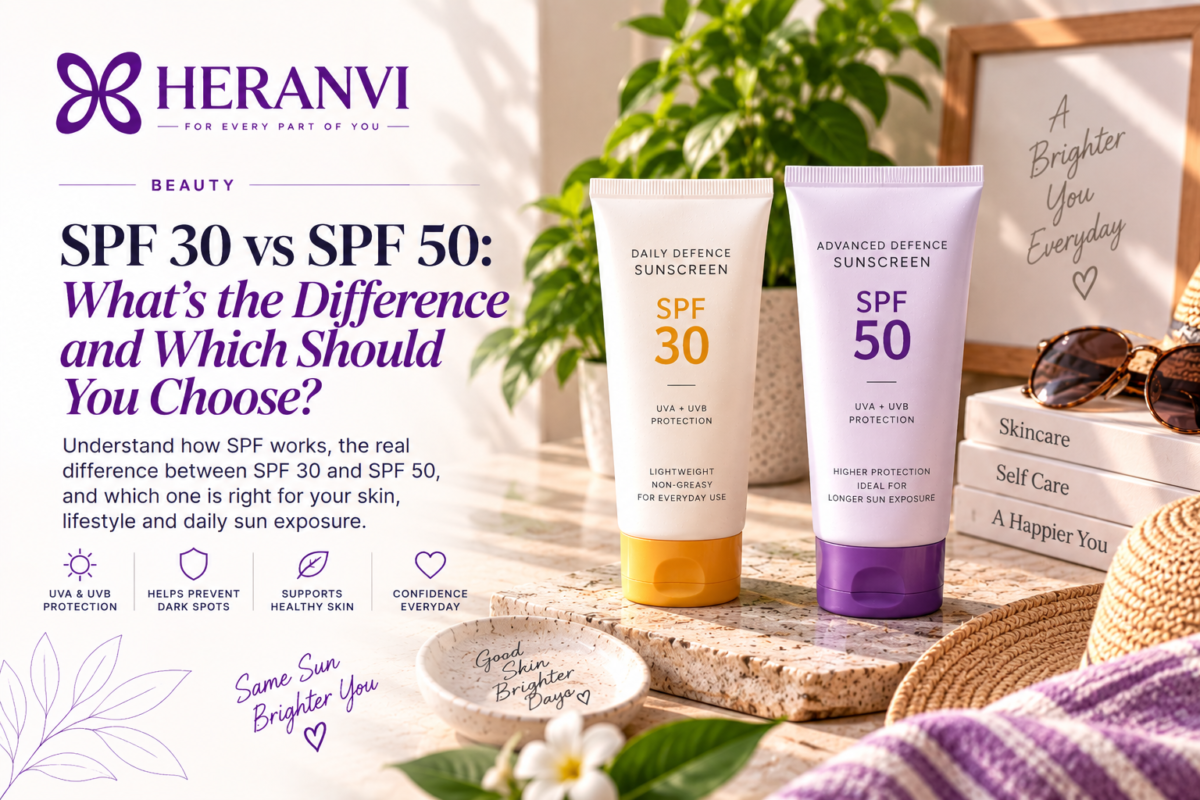
SPF 30 or SPF 50? It is one of the most common questions people face when choosing sunscreen, and the bigger number can make SPF 50 seem automatically necessary for everyone.
The difference is more nuanced. Both SPF 30 and SPF 50 can provide strong UVB protection when applied properly, but SPF 50 does provide a higher level of protection. Your choice should also consider UVA protection, how much sunscreen you apply, your daily activities and whether you are likely to reapply it.
What does SPF actually mean?
SPF stands for Sun Protection Factor. It primarily measures how well a sunscreen protects against UVB radiation, which is a major cause of sunburn and contributes to skin cancer.
SPF should not be interpreted simply as the number of hours you can safely stay in the sun. Sun exposure varies with factors such as time of day, location, weather, skin type and the amount of sunscreen applied.
Think of SPF as a measure of tested protection against UVB exposure rather than a countdown timer.
How much protection does SPF 30 provide?
According to the American Academy of Dermatology, SPF 30 filters about 97% of the sun’s UVB rays when used as directed.
That is why dermatologists commonly recommend choosing a sunscreen with SPF 30 or higher rather than relying on very low-SPF products.
But that percentage assumes appropriate application. Using too little sunscreen, missing areas of skin or failing to reapply when needed can reduce the protection you actually receive.
How is SPF 50 different?
SPF 50 provides greater tested UVB protection than SPF 30.
The increase is not proportional to the number on the bottle. SPF 50 does not mean you receive nearly twice the practical protection of SPF 30, and no sunscreen blocks 100% of ultraviolet radiation.
Still, the difference should not be dismissed as meaningless. Higher SPF can provide an additional margin of UVB protection, particularly because people do not always apply sunscreen perfectly in everyday life.
Does higher SPF mean better UVA protection?
Not necessarily.
SPF primarily tells you about protection against UVB-related sunburn. It does not, by itself, tell you the full level of protection against UVA radiation.
UVA penetrates more deeply into the skin and contributes to premature skin ageing and skin damage. This is why choosing sunscreen only by comparing SPF numbers can be misleading.
Look for broad-spectrum or clearly stated UVA protection as well. In India, you may also see PA ratings such as PA+++, PA++++ on sunscreen packaging.
A sunscreen with a high SPF should therefore still be evaluated for its UVA protection rather than assuming that a larger SPF number tells you everything.
Should you choose SPF 30 or SPF 50?
For everyday sun protection, SPF 30 or higher is a widely recommended starting point. Choosing between SPF 30 and SPF 50 can then depend on your circumstances and preferences.
SPF 50 may be worth considering when you want a higher level of UVB protection, expect significant outdoor exposure or simply prefer the additional protection offered by the higher SPF.
But SPF 50 should not create a false sense of security. It does not mean you can apply less sunscreen, skip reapplication or stay in strong sunlight indefinitely.
An SPF 30 sunscreen that you apply properly and consistently can be more useful in practice than an SPF 50 product you dislike wearing and therefore rarely use.
Application matters more than many people realise
The protection shown on a sunscreen label depends on using an adequate amount of product.
In everyday life, people may apply less sunscreen than was used during standardized SPF testing. That means the protection experienced in real-world use may be lower than the number printed on the packaging suggests.
Apply sunscreen generously to exposed skin and make sure commonly missed areas receive protection too.
Reapplication is also important, particularly after swimming or sweating and according to the product’s directions. Water-resistant sunscreen can be useful for activities involving water or heavy sweating, but water resistance does not mean the product remains effective indefinitely.
What matters beyond the SPF number?
SPF is important, but it should not be the only factor you consider when buying sunscreen.
UVA protection: Look for broad-spectrum protection and relevant UVA information such as PA ratings where provided.
Skin compatibility: Choose a formulation that feels comfortable on your skin and does not discourage regular use.
Finish: Texture, oiliness, white cast and how the product behaves under makeup can influence whether you enjoy wearing it every day.
Water resistance: Consider this when swimming, exercising or expecting significant sweating.
Consistent use: A sunscreen only helps when you actually use it appropriately.
What about Indian weather and skin?
India includes very different climates and patterns of sun exposure, so there is no single sunscreen routine that fits everyone.
Someone spending much of the day outdoors may have different practical needs from someone whose exposure mainly comes from commuting. Heat, humidity and sweating can also affect which sunscreen textures feel comfortable enough to use consistently.
Skin tone does not remove the need for sun protection. While different skin tones respond differently to UV exposure, ultraviolet radiation can affect all skin types.
Instead of choosing sunscreen solely because it says SPF 30 or SPF 50, consider the complete formula and how it fits your actual routine.
How Heranvi looks at SPF
Heranvi does not treat the highest SPF number as an automatic sign that one sunscreen is the best choice.
When evaluating sunscreen information, we consider the stated SPF alongside UVA protection, formulation, skin suitability, cosmetic experience, available evidence and the manufacturer’s published product information.
We also separate editorial assessment from commercial relationships. Affiliate availability or commercial arrangements do not determine how products are ranked or recommended.
The practical takeaway
SPF 30 already provides a high level of UVB protection when used correctly, while SPF 50 provides additional protection. The right choice is not simply about selecting the largest number available.
Look for SPF 30 or higher, pay attention to UVA protection, choose a formulation you are comfortable wearing, apply enough and reapply when necessary.
And remember that sunscreen works best as part of broader sun protection. Shade, protective clothing, hats and other measures can reduce UV exposure alongside sunscreen.