Choosing between mineral and hybrid sunscreen can sound more complicated than it needs to be. One uses mineral UV filters, while the other combines different types of filters — but that alone does not tell you which sunscreen will work better for your skin.
For most people, the more useful questions are practical: Does it provide adequate UVA and UVB protection? Does the formula feel comfortable? Does it leave a noticeable cast? And, most importantly, will you actually want to wear enough of it regularly?
What is a mineral sunscreen?
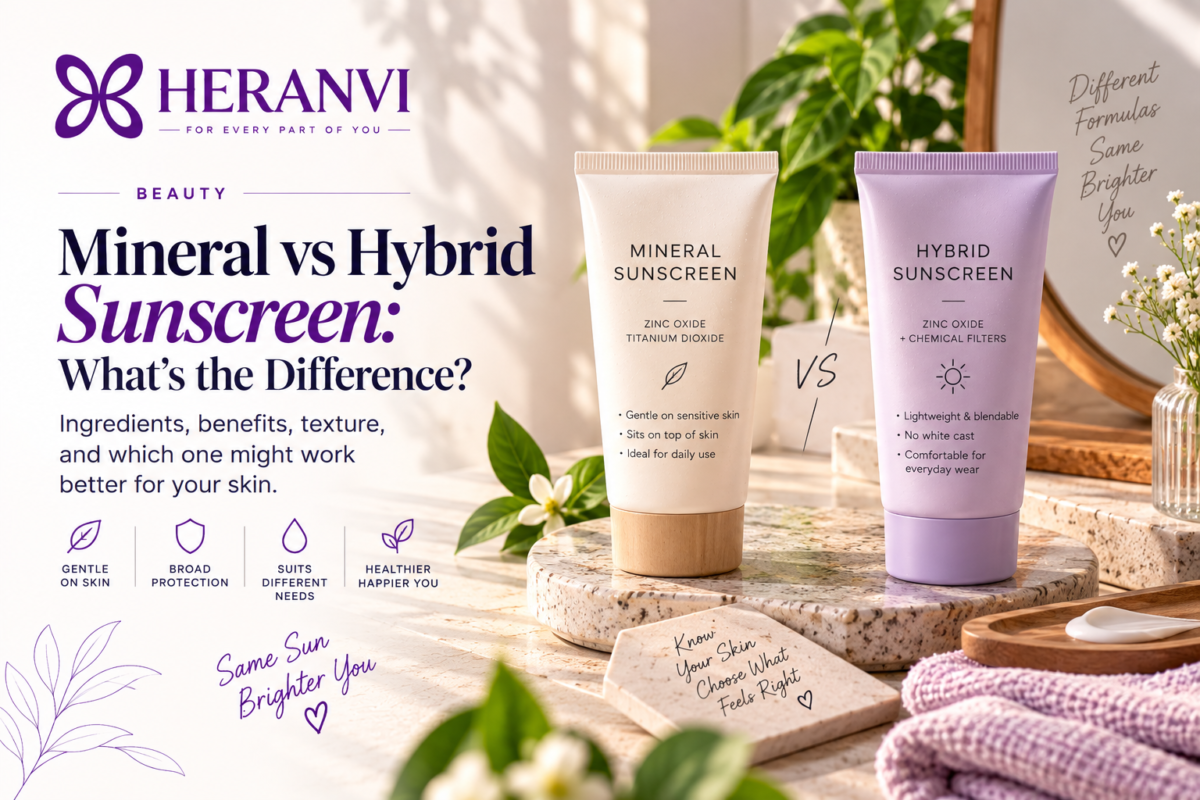
Mineral sunscreens use inorganic UV filters such as zinc oxide and titanium dioxide. Depending on the formulation and regulatory market, a product may use one or both of these filters.
You may have heard that mineral sunscreen simply sits on the skin and “reflects” UV radiation while other sunscreens absorb it. That explanation is too simplistic. Mineral UV filters also protect substantially through absorption of ultraviolet radiation, alongside scattering and reflection.
The finished formulation matters just as much as the filter category. Two mineral sunscreens can feel very different on the skin depending on their texture, particle formulation, tint and other ingredients.
What is a hybrid sunscreen?
A hybrid sunscreen combines inorganic mineral filters with organic UV filters in the same formulation.
This allows formulators to use different filters together to build broad UV protection while also working toward qualities such as spreadability, finish, water resistance and cosmetic comfort.
Being “hybrid” does not automatically make a sunscreen stronger or better than a mineral formula. The protection offered by the finished product — including its SPF and UVA protection — matters more than the category name alone.
Is mineral sunscreen better for your skin?
Not necessarily.
There is no universal rule that everyone should choose mineral sunscreen over hybrid sunscreen. Skin sensitivity, texture preference, ingredients, climate and how a particular formulation behaves on your skin can all affect which product you prefer.
If your skin is sensitive or reactive, you may find some formulations more comfortable than others. But “mineral” should not be treated as a guarantee that a sunscreen cannot irritate your skin, just as “hybrid” does not mean a sunscreen will cause irritation.
If you are unsure about a product because of an existing skin condition or previous reactions, individual advice from a dermatologist can be more useful than choosing solely by the mineral or hybrid label.
What about white cast?
White cast can be an important consideration, especially on medium and deeper skin tones.
Mineral filters such as zinc oxide and titanium dioxide can create a visible pale or grey residue depending on the formulation. Modern formulations may use different particle technologies or add tint to reduce how noticeable that cast appears.
That does not mean every mineral sunscreen will leave a strong white cast, or that every hybrid sunscreen will be invisible. The actual finished product matters.
For Indian skin tones, this is worth checking before deciding whether a sunscreen is comfortable enough for everyday use.
Mineral vs hybrid: what should you compare?
Instead of choosing based only on the filter category, compare the things that affect protection and everyday use.
Protection: Look at the sunscreen’s SPF and UVA protection rather than assuming one filter type provides better protection.
Finish: Consider whether you prefer matte, dewy, creamy or lightweight textures.
Visible cast: If white cast matters to you, look at how the actual formulation performs on your skin tone. Tinted mineral formulas may be one option worth considering.
Skin comfort: Pay attention to how the sunscreen feels on your own skin, particularly if you are sensitive to specific ingredients or textures.
Daily use: A sunscreen that looks excellent on paper is not particularly useful if its texture or finish makes you avoid wearing it consistently.
How two different formulas illustrate the difference
Two sunscreens currently in Heranvi’s product research provide a useful example of these categories.
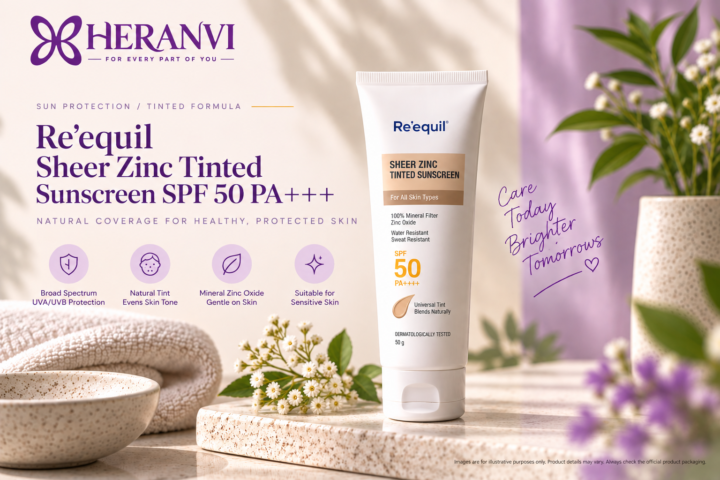
Re’equil Sheer Zinc Tinted Sunscreen SPF 50 PA+++ is described by the manufacturer as a 100% mineral sunscreen. Its ingredient list identifies zinc oxide as its sunscreen filter, and the formula includes tint pigments. The manufacturer positions the tint as a way to address the visible cast commonly associated with mineral sunscreen.
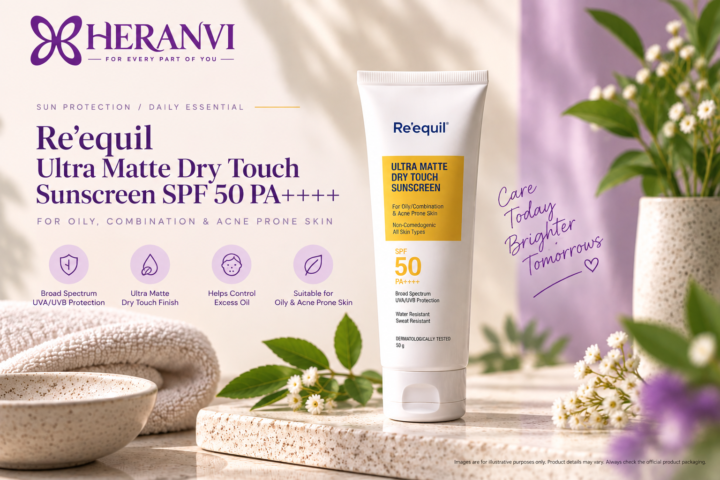
Re’equil Ultra Matte Dry Touch Sunscreen SPF 50 PA++++ is described by the manufacturer as a hybrid sunscreen. Its published ingredient list contains inorganic filters including zinc oxide and titanium dioxide alongside multiple organic UV filters.
These examples should not be interpreted as evidence that one is universally better. They demonstrate how two products can take different formulation approaches while both being designed for sun protection.
Which one should you choose?
If you specifically prefer an all-mineral formulation, a mineral sunscreen may be the more appropriate place to start. If you prefer the characteristics of a particular hybrid formulation — for example its texture or finish — there is no reason to reject it simply because it combines filter types.
Your decision can instead come down to protection, skin compatibility, cosmetic finish, white cast, water resistance when relevant, and whether you are comfortable using the product consistently.
The practical takeaway
“Mineral” and “hybrid” describe how a sunscreen is formulated; they are not quality rankings.
A good sunscreen is one that provides appropriate UVA and UVB protection and works well enough for you to apply it properly and consistently. Rather than looking for a universally superior category, compare the finished formulas and choose according to your skin, routine and preferences.
Whatever type you choose, sunscreen is only one part of sun protection. Shade, clothing and other protective measures remain useful alongside regular sunscreen use.